
Quick Answer: What Causes Low Water Pressure in Canal Winchester?
Low water pressure in Canal Winchester homes is most commonly caused by a failing pressure regulator, corroded or undersized supply lines, mineral buildup inside fixtures, or seasonal demand spikes on Columbus-area municipal water systems during summer months. If your whole home water pressure has dropped noticeably, a professional diagnosis is the fastest path to a lasting fix.
Introduction: Why Canal Winchester Homeowners Are Dealing with Pressure Problems This Summer
If you have turned on a shower or kitchen faucet in your Canal Winchester home this summer and noticed weak, uneven, or sputtering flow, you are not alone. Low water pressure is one of the most reported plumbing complaints across the Columbus OH metro area during the hottest months of the year, and homes in Canal Winchester face unique pressures from rapid neighborhood development, aging supply infrastructure, and peak municipal demand. The frustration is real: dishes pile up, showers feel inadequate, and irrigation systems underperform right when your lawn needs water most.
The good news is that most causes of low water pressure can be identified and corrected by a trained professional, often in a single visit. Whether you are dealing with a fixture-specific issue or a whole home water pressure drop, Transit & Flow is ready to help Canal Winchester homeowners get reliable flow restored quickly. Call Transit & Flow at 614-333-8092 to schedule a pressure assessment today.
Key Takeaways
- Low water pressure in Canal Winchester can stem from municipal supply issues, a faulty pressure regulator, corroded supply lines, or fixture-level buildup.
- Summer is peak season for pressure complaints due to increased irrigation and city demand.
- A professional pressure test pinpoints whether the problem is on the city side or inside your home.
- Transit & Flow serves Canal Winchester and greater Columbus OH with fast, transparent plumbing diagnostics.
- Never attempt to adjust or replace a pressure regulator, main shutoff valve, or supply line without professional help.
Understanding Low Water Pressure: The Primary Service Explained
Water pressure is the force that pushes water through your home plumbing system from the municipal main or well pump to every faucet, showerhead, and appliance. In the Columbus OH metro area, including Canal Winchester, residential water pressure typically ranges from 40 to 80 psi (pounds per square inch). When pressure drops below 40 psi, you will notice sluggish fixture flow, slow-filling toilets, and appliances like dishwashers and washing machines that struggle to operate efficiently.
Whole Home vs. Fixture-Specific Pressure Loss
There is an important distinction between whole home water pressure loss and a drop at a single fixture. Whole home pressure loss suggests a problem with the main supply line, pressure regulator, or the municipal supply itself. Fixture-specific issues usually point to a clogged aerator, a partially closed shutoff valve beneath the sink, or mineral deposits in the fixture supply hose. Identifying which category your problem falls into is the first step toward the right repair.
How Pressure Regulators Work
Most Canal Winchester homes built after the early 1990s have a pressure regulator (also called a pressure reducing valve or PRV) installed near the main water entry point. This device reduces high incoming city pressure to a safe, consistent level for household plumbing. When a pressure regulator fails, it can either allow dangerously high pressure, which stresses pipes and fixtures, or restrict flow so severely that every tap in the house runs weak. A properly functioning pressure regulator is essential to maintaining safe, reliable whole home water pressure.
Supply Line Considerations
The supply line running from the city main to your home is another critical link. Older homes in Canal Winchester may still have galvanized steel supply lines that corrode internally over decades, gradually narrowing the pipe diameter and choking off flow. Newer developments typically use copper or cross-linked polyethylene (PEX), which resist corrosion and maintain consistent interior volume for years. If your home was built before 1985, supply line material should be evaluated as a potential root cause of low pressure.
Warning Signs and Symptoms of Low Water Pressure
- Showers that produce a weak or inconsistent stream, especially when another fixture is running
- Faucets that take noticeably longer to fill pots, sinks, or bathtubs
- Washing machines or dishwashers displaying error codes or running extended cycles
- Sprinkler systems that fail to reach their normal coverage area
- Intermittent sputtering or air bursts when turning on a tap
- Visible sediment or discoloration at faucet aerators
- Water pressure that drops significantly during early morning or evening peak hours
If you are noticing multiple symptoms across different fixtures and floors, that pattern strongly suggests a whole home water pressure issue rather than an isolated fixture problem.
Root Causes of Low Water Pressure in Canal Winchester
Municipal Supply and Seasonal Demand
During Columbus OH summers, municipal water systems face enormous demand from lawn irrigation, pool filling, and increased household use. Canal Winchester, which has experienced significant residential growth in recent years, can see pressure dips during peak usage windows. City main breaks, hydrant flushing, or planned maintenance can also cause temporary drops.
Failing or Misadjusted Pressure Regulator
A pressure regulator has a typical service life of 10 to 15 years. As internal components wear, the valve may fail in a partially closed position, reducing flow throughout the house. This is one of the most common causes of gradual whole home pressure loss.
Corroded or Undersized Supply Lines
Internal corrosion in galvanized steel pipes builds up over time, effectively shrinking the pipe opening. Homes that have been remodeled or expanded may also have undersized supply lines that were adequate for the original fixture count but cannot serve the added bathrooms, outdoor spigots, or appliance connections.
Mineral Buildup and Hard Water
Columbus area water contains moderate mineral content. Over time, calcium and magnesium deposits accumulate inside pipes, water heater tanks, aerators, and showerheads. This buildup restricts fixture flow and can affect pressure readings at individual taps.
Leaks in the System
A hidden slab leak, a leaking supply line underground, or even a running toilet can divert water away from the fixtures you are trying to use, resulting in noticeable pressure loss. Unexplained increases in your water bill often accompany hidden leaks.
Partially Closed Shutoff Valve
After maintenance or a repair, the main shutoff valve or individual fixture shutoff valves sometimes get left partially closed. This simple oversight can mimic the symptoms of a serious pressure problem.
The Professional Diagnostic Process
When a Transit & Flow technician arrives at your Canal Winchester home for a water pressure assessment, the process typically follows these steps:
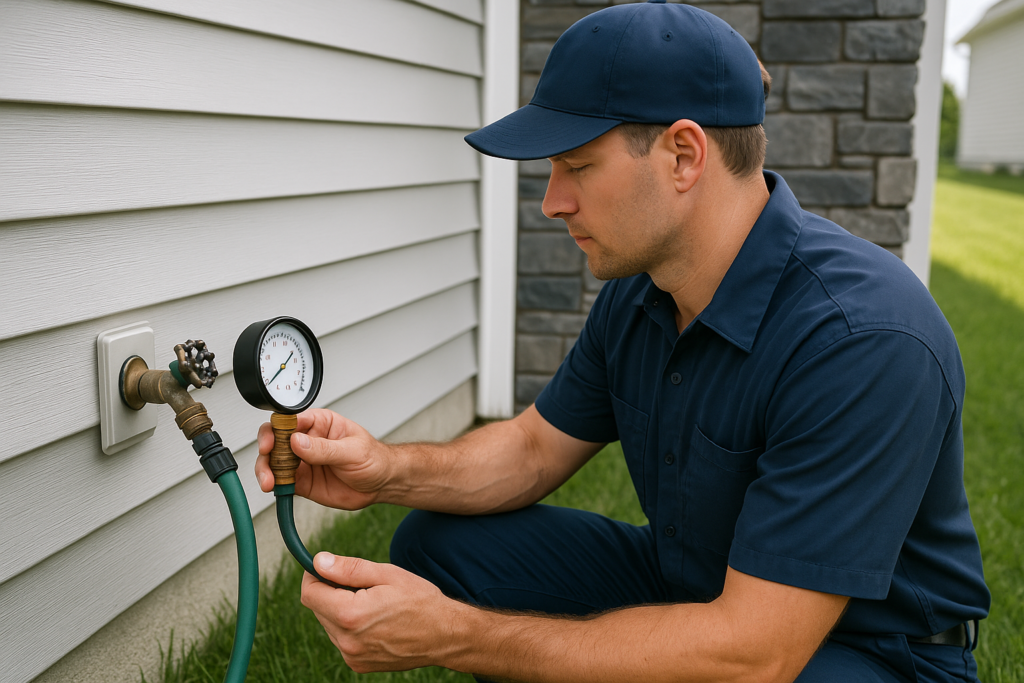
- Pressure baseline test — A calibrated gauge is attached at the hose bib nearest the water meter to measure incoming pressure from the city main.
- Interior pressure test — Pressure is tested at multiple fixtures inside the home to determine whether the drop is whole home or fixture-specific.
- Pressure regulator inspection — The PRV is visually and functionally assessed for wear, corrosion, or improper adjustment.
- Supply line evaluation — The technician inspects visible supply line material, age, and condition, noting any galvanized sections.
- Leak detection scan — Meter readings and acoustic or thermal tools help identify hidden leaks that could be siphoning pressure.
- Recommendation and estimate — Based on findings, the technician provides a clear explanation of the issue and a written estimate before any work begins.
Cost Variables for Low Water Pressure Repairs
Repair costs for low water pressure vary significantly depending on the root cause. Transit & Flow provides upfront estimates so there are no surprises. Here are the primary cost variables:
- Pressure regulator replacement — Cost depends on the valve location, accessibility, and whether repiping of the surrounding connection is needed.
- Supply line replacement — Length of run, depth of burial, material chosen (copper vs. PEX), and landscape restoration all affect the final price.
- Fixture-level repairs — Aerator cleaning, cartridge replacement, or shutoff valve repair tend to be among the most affordable fixes.
- Leak repair — Costs range widely based on leak location (accessible wall vs. under a slab) and extent of water damage.
- Whole home repipe — The most significant investment, reserved for homes with widespread corrosion or outdated piping materials.
Because every home is different, Transit & Flow does not quote flat rates for pressure repairs without a proper on-site assessment. Call 614-333-8092 or request an estimate online to get accurate, transparent pricing for your situation.
When to Call a Professional
Some pressure issues resolve on their own, such as brief municipal pressure dips during hydrant flushing. However, you should contact a professional plumber if you experience any of the following:
- Whole home water pressure has been noticeably low for more than 24 hours
- Pressure loss is accompanied by discolored water or unusual odors
- You hear banging, hammering, or vibrating pipes when fixtures are turned on or off
- Your water bill has spiked without an obvious change in usage
- You suspect a leak in a wall, ceiling, floor, or underground
- The pressure regulator is more than 10 years old and has never been serviced
Do not attempt to adjust, remove, or replace a pressure regulator or main shutoff valve yourself. Incorrect adjustment can cause dangerously high pressure that damages pipes, appliances, and fixtures. Call Transit & Flow at 614-333-8092 for safe, professional service.
Safe Homeowner Checks
Before calling for service, there are a few safe, non-hazardous checks you can perform:
- Check the main shutoff valve — Verify that the valve near your water meter is fully open. Turn the handle counterclockwise until it stops (gate valve) or align it with the pipe direction (ball valve).
- Inspect faucet aerators — Unscrew the aerator from the end of a faucet spout and look for sediment or mineral buildup. Rinse it clean and reattach.
- Test multiple fixtures — Run water at several taps simultaneously to determine whether the pressure drop is isolated to one fixture or affects the whole house.
- Ask your neighbors — If neighbors are also experiencing low pressure, the issue is likely on the municipal side. Contact the city of Canal Winchester utilities department to report the concern.
- Review your water bill — A sudden unexplained increase may signal a hidden leak contributing to pressure loss.
These checks are informational only. If any check reveals a possible leak, pipe damage, or equipment failure, stop and contact a professional immediately.
Repair vs. Replace: Making the Right Decision
Not every pressure problem requires a major replacement. Here is a general framework for deciding between repair and replacement:
- Repair is typically appropriate when a single fixture is affected, when a shutoff valve just needs to be opened, or when cleaning an aerator or showerhead restores flow.
- Replacement is typically appropriate when the pressure regulator has failed, when galvanized supply lines are corroded beyond practical repair, or when the home has experienced multiple pressure-related issues over the past year.
- Whole home repipe should be considered when corrosion is widespread, when the home has a mix of incompatible pipe materials, or when lead or polybutylene piping is present.
A Transit & Flow technician will walk you through the repair-vs-replace decision with full transparency, showing you the evidence from the diagnostic process and explaining the expected lifespan of each option.
Local Columbus and Canal Winchester Context
Canal Winchester sits in the southeastern corridor of the Columbus OH metro area, a community that has grown rapidly over the past two decades. Many homes in newer developments like Westchester and Villages at Westchester were built during periods of high-volume construction, which occasionally means plumbing systems were installed quickly and may benefit from professional review after 10 to 15 years of service.
Columbus-area water is sourced from the Scioto River and Hoover Reservoir, among other supplies, and contains moderate hardness levels. Over time, this mineral content contributes to internal pipe scaling and fixture buildup, both of which degrade fixture flow and overall pressure. Summer months compound these issues by increasing citywide demand, making July and August the most common season for pressure complaints in the Canal Winchester area.
Homes in older sections of Canal Winchester, particularly those near the historic downtown corridor, may still have original galvanized supply lines. If your home was built before 1985 and has never had a supply line assessment, summer is an ideal time to schedule an evaluation before peak demand puts additional stress on aging infrastructure.
Frequently Asked Questions
What should I do first if I notice low water pressure?
Start by checking whether the issue affects one fixture or your whole home. Inspect faucet aerators for mineral buildup and confirm that your main shutoff valve is fully open. If the problem persists across multiple fixtures, it is time to call a professional for a pressure test.
What should I avoid doing when dealing with low water pressure?
Never attempt to adjust or replace a pressure regulator yourself. Incorrect settings can cause pipe bursts or fixture damage from excessive pressure. Avoid using chemical drain cleaners to try to improve flow, as they can corrode pipes and worsen the problem.
What factors affect the cost of fixing low water pressure?
The primary variables are the root cause of the pressure loss, the location and accessibility of the affected component, the material and length of any pipe that needs replacement, and whether the issue is isolated to a fixture or affects the whole home. Call Transit & Flow at 614-333-8092 for a personalized estimate based on your specific situation.
When is low water pressure an emergency?
Low water pressure becomes urgent when it is accompanied by visible leaks, water discoloration, sewage odors, or a sudden spike in your water bill. These symptoms may indicate a burst pipe, a compromised supply line, or a sewer line issue that requires immediate professional attention.
When should I call a professional for low water pressure?
If basic homeowner checks such as opening the shutoff valve and cleaning aerators do not resolve the issue within 24 hours, a professional diagnosis is recommended. Persistent low pressure often indicates problems that cannot be safely addressed without specialized tools and training.
How can Transit & Flow help with low water pressure in Canal Winchester?
Transit & Flow provides comprehensive water pressure diagnostics, pressure regulator replacement, supply line repair and replacement, fixture-level service, and leak detection for Canal Winchester homeowners. Every visit includes a thorough assessment, clear explanation of findings, and an upfront estimate before any work begins.
Maintenance Tips to Prevent Low Water Pressure
- Clean faucet aerators and showerheads every six months to remove mineral deposits.
- Have your pressure regulator inspected every five years or sooner if you notice gradual pressure changes.
- Schedule a professional supply line assessment if your home is more than 30 years old.
- Flush your water heater annually to prevent sediment buildup from affecting hot water pressure.
- Monitor your water bill monthly for unexplained increases that may indicate hidden leaks.
- During summer peak demand, avoid running multiple high-flow fixtures simultaneously when possible.
Glossary of Key Terms
Pressure Regulator (PRV)
A mechanical valve installed on the main water supply line that reduces incoming municipal pressure to a safe level for residential plumbing, typically between 40 and 80 psi.
Supply Line
The pipe that carries water from the municipal main or well to your home. Common materials include copper, galvanized steel, PEX, and CPVC.
Shutoff Valve
A valve that controls the flow of water to a specific fixture, appliance, or the entire home. The main shutoff valve is typically located near the water meter.
Fixture Flow
The volume of water delivered through a single fixture, such as a faucet or showerhead, measured in gallons per minute (GPM). Low fixture flow may indicate local blockage or system-wide pressure loss.
Water Heater
An appliance that heats and stores or instantly delivers hot water for household use. Sediment buildup inside the tank can reduce hot water pressure over time.
Get Your Water Pressure Restored: Contact Transit & Flow Today
Low water pressure does not have to be something you tolerate through another Columbus summer. Whether your Canal Winchester home needs a pressure regulator replacement, a supply line upgrade, or a comprehensive diagnostic to identify the source of the problem, Transit & Flow has the trained professionals and equipment to get it resolved right.
Call Transit & Flow at 614-333-8092 to schedule your pressure assessment, or request your estimate online. We serve Canal Winchester, Columbus, and surrounding communities with transparent, reliable plumbing service that puts your comfort and safety first.
